Tea, herbalism and health
At Anna Herbalism, well-being and health play a central role, as reflected in its name. Herbalism, also known as herbal medicine, is a holistic approach that emphasizes the human connection with nature, traditions, and herbs, and from this perspective, seeks natural ways to support and promote well-being. At the same time, we believe it is essential that modern scientific insights play a valuable and integral role in this process.
The human body has evolved in close connection with nature – surrounded by plants, herbs, and natural nutrients. Our organism is attuned to this. However, especially in the past fifty years, our diet has changed significantly: we increasingly consume processed and industrialized products that do not naturally meet the body's needs. This can lead to long-term health risks, such as complaints, ailments, and chronic diseases. From this perspective, herbalism offers a realistic and powerful philosophy that approaches well-being in a thoughtful and coherent way. In certain languages, the relationship between tea and herbs, and herbalism in general, is even more clearly emphasized. For example, the word for tea in Polish is "herbata."
We do not provide medical advice and do not view herbal medicine as an alternative to medications and modern medicine, but rather as a (preventive) supplement. Medicines are often developed by extracting and concentrating an active ingredient from a naturally occurring substance that has proven effective in treating certain physical or mental complaints. In this sense, medications address complaints or illnesses acutely, while medicinal herbs should be seen as preventive measures. The philosophy of the saying "an apple a day keeps the doctor away" applies here. This philosophy emphasizes the importance of a continuous and regular intake of important substances such as vitamins and antioxidants.
The interaction between certain substances and the human body is highly complex and can vary significantly from person to person. Substances that are highly effective in treating complaints or illnesses in some people may prove ineffective in others. Due to the complexity of this topic, even modern medicine often struggles to make conclusive statements about nutrition and its role in preventing complaints and illnesses. Therefore, statistical methods are often used to draw conclusions.
Throughout history, various peoples have discovered and observed that certain herbs and substances can have a beneficial effect on human health. What's remarkable here is that different civilizations have independently reached the same conclusions and that the same effects have been observed throughout the centuries. Therefore, there is a wealth of collective evidence to support the beneficial effects of these herbs and substances. However, over time, this knowledge has faded from our collective memory and faded into the background. At Anna Herbalism, we therefore want to contribute to people delving deeper into this topic and gaining knowledge about it. Our teas include information about the known health benefits.
Well-being goes far beyond consumption. It would probably not be incorrect to claim that more people suffer from mental and social issues than from physical ailments. Therefore, it's particularly important to consider the role tea plays as a social and cultural connector. This aspect deserves our attention, and we will explore it in detail.

What is healthy?
Nowadays, the word "healthy" is often wrongly used as a marketing label. For example, we see a false distinction between tasty and healthy in advertisements, as if this distinction always existed. But all too often, we think about the concept of "healthy" too late.
The question of when something deserves the label healthy is not trivial. If we look in a dictionary, for example, we see 'beneficial' as the meaning. However, something that is beneficial can be harmful in the wrong dose. An even more complicated case is fruit that has been treated with pesticides, which is often the case nowadays. The consensus is that fruit should look nice without imperfections and the presence of insects. It is of course true that apples, for example, contain many beneficial substances, such as antioxidants, but in this way they can also contain harmful substances. The question then arises whether consuming such an apple is healthy, and whether the term healthy is a 'net' term in which beneficial and harmful things can be offset against each other? So it is a complicated question in any case, but we can at least conclude that there is a risk given the uncertain factors.
Herbalism offers support and a natural solution to these issues, because it starts from the environment in which the human organism has evolved and responds to what the body needs and experiences as natural or unnatural.
Natural sources and supplements
Nowadays, we see many places offering supplements claiming to have beneficial effects on health. These supplements often contain ingredients from plants or herbs, for example. And while high-quality products exist, we consciously choose not to offer supplements on our website or store. We believe only in the direct consumption of natural sources, and tea offers the most natural way to do this. We believe only in unprocessed and organic products because they have a long history of beneficial effects, while this is not the case with supplements.
Sources
We can specifically recommend the following books:
-
Encyclopedia of Herbal Medicine, by Andrew Chevallier. This is the most comprehensive reference we can recommend, covering 550 herbs and their properties.
-
Medicinal Herbs, by Rosemary Gladstar. This is a more concise work on herbalism and is more recommended for beginners in the field.
-
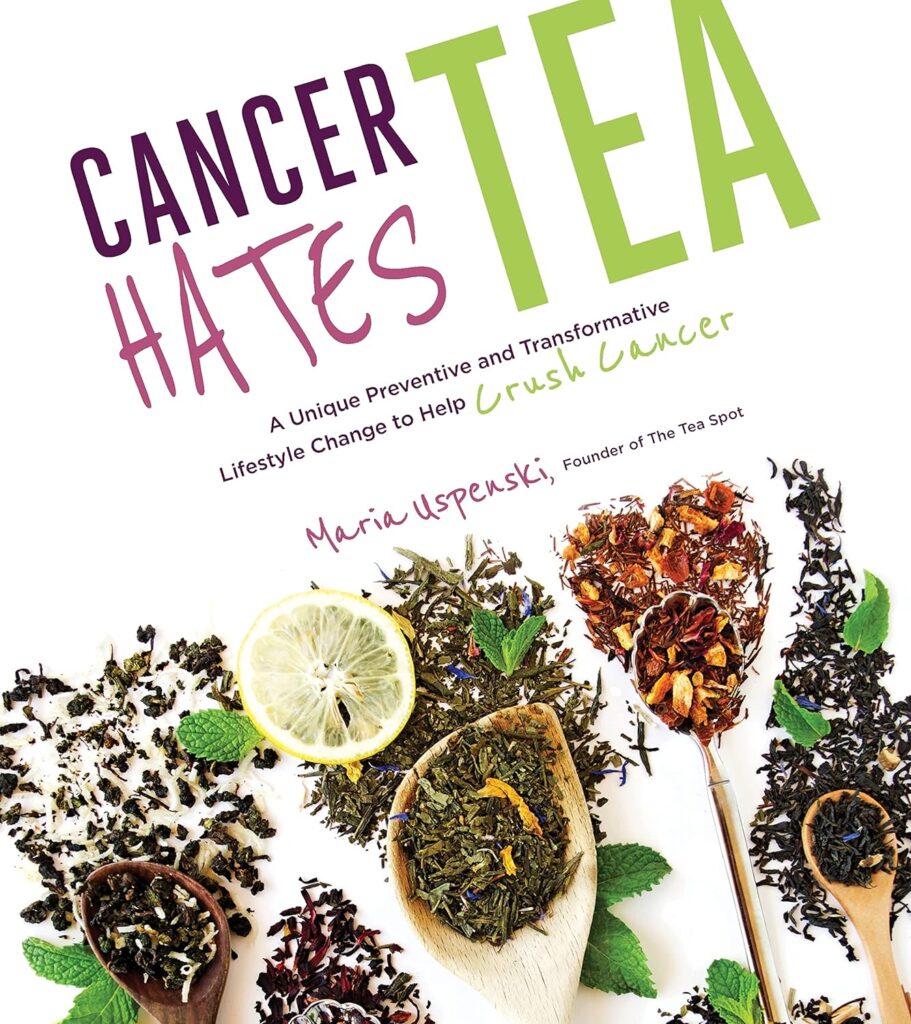
"Cancer Hates Tea," by Maria Uspenski. This is a fascinating book that takes a stronger stance than the previous two sources regarding health benefits, particularly regarding cancer.